Editorial Picks
5 International Restaurants Anchoring Hongdae's Global Scene
From a Sicilian-owned trattoria off the main core to a Yeonnam-dong donburi specialist locals call the Mini-Tokyo anchor — five international tables worth a measured rest-day lunch.
I trained in Boston and practice in California, and I treat the international dining cluster in Yeonnam-dong as one of the meaningful rest-day variables for my Seoul patients. The neighborhood is, in working terms, the Japanese-leaning international dining anchor of central Seoul — locals call its main alley Mini-Tokyo for reasons a visitor registers within the first ten minutes — and the Sicilian-owned trattoria off the Hongdae main core is the most consistently cited Italian reference in the broader cluster. For an international patient on a five-day Seoul trip with one quiet rest day built in, the Hongdae and Yeonnam-dong international rotation reads the right way around: the cluster sits roughly twenty-eight minutes east on Line 2 from Gangnam Station, the tables are walkable across a single lunch, and the food culture is meaningfully different from the Korean-bar register that dominates the Apgujeong-Cheongdam medical corridor. This guide reads five Hongdae-area international restaurants — four in Yeonnam-dong, one in the Hongdae core — as Featured A through E, alphabetical-not-ranked, organized so a returning patient can build a real lunch rotation across a multi-trip visit rather than a single representative stop.
Why the Hongdae-Yeonnam axis defines Seoul's international dining map
Yeonnam-dong holds the densest cluster of Japanese-leaning international restaurants in Seoul, and the main alley running north of Hongik University Station Exit 3 is widely called Mini-Tokyo by residents and travel editors who have catalogued the neighborhood across the past decade. The Japanese-leaning register is not accidental: a wave of Korean operators trained in Tokyo and Osaka returned in the mid-2010s and opened restaurants in Yeonnam-dong specifically because the rent and the foot traffic both fit the donburi, soba, and izakaya format better than the higher-rent Apgujeong-Cheongdam corridor. Italian dining sits adjacent — the cluster has its own Japanese-Italian fusion signature that Bistro Toma and Camello have anchored editorially through repeated coverage in IVisitKorea, Tales of Korea, and NOL World — and the most consistently noted authentic Sicilian table in the broader Hongdae cluster is owned and operated by chefs from Sicily directly. Together the categories produce a working international cluster that reads as a meaningfully different neighborhood from the Korean-bar register that dominates Mapo's nightlife core. For a referring physician planning a patient's rest-day lunch, that distinction matters because the cluster offers the kind of measured Japanese or Italian midday meal that an international patient on a recovery day can build around — none of the tables here require physical engagement beyond a calm sit-down, and the menu registers are forgiving for the kind of patient whose appetite has not fully returned after a same-day non-invasive aesthetic session.
How I built this rotation
Methodology, briefly. The five entries below were selected on three criteria. First, multi-source editorial confirmation across the canonical English-language references for Seoul international dining — IVisitKorea, Tales of Korea, NOL World, Tripadvisor's curated Hongdae Italian list, Greysuitcase, Strictly Ours, and Budify — supplemented by Korean-resident editor cross-checks for venue confirmation and Korean-name verification. Second, geographic walkability from Hongik University Station within the Mapo-gu international cluster; four entries sit in Yeonnam-dong, the fifth in the Hongdae core. Third, category mix across the international register: Japanese-Italian fusion, authentic Sicilian, Japanese donburi-soba specialist, and pasta-and-risotto Italian — to support a real two-to-three-lunch rotation rather than a single representative stop. The Sicilian table anchors the rotation as the authenticity reference; the Japanese-Italian houses anchor the cluster's defining fusion register; the donburi-soba specialist anchors the strict-Japanese tier; the pasta-risotto Italian closes the rotation as the casual cluster anchor. Pricing reflects observed retail at the time of writing, with each restaurant's price range available on the venue's own published menu and the broader cluster typically running KRW 15,000 to 35,000 per main course. Hours and lineup shift seasonally and should be re-confirmed on the morning of visit. Inclusion is editorial; none of the restaurants here are partners of the parent network.
Five international restaurants, in the order you would walk them
Featured A through E — alphabetical, not ranked. The rotation begins in Yeonnam-dong with the Japanese-Italian fusion anchor, walks through the donburi-soba specialist on the same main alley, picks up the vintage European cottage pasta house and the casual Italian around the corner, and finishes in the Hongdae core at the Sicilian-owned trattoria. A patient with a single Hongdae lunch runs one of the first three; a returning patient with two lunches builds the Yeonnam rotation across both; a third trip closes the rotation at the Hongdae core.
Featured A — Bistro Toma (Yeonnam-dong)
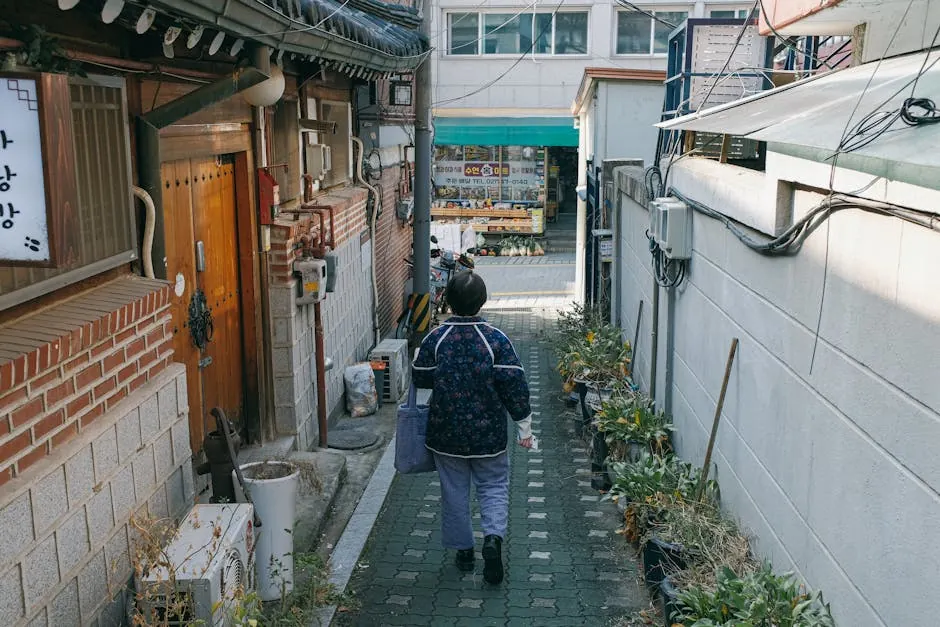
The Japanese-Italian fusion anchor of the Yeonnam cluster. Bistro Toma, sometimes operating under the Yeonnam Toma signage, runs its kitchen out of a renovated old Korean house with a quiet hanok-adjacent interior register — wooden beams, low-rise rooms, the kind of layout that frames the lunch as a measured midday stop rather than a transactional meal. The menu sits at the heart of the cluster's defining Japanese-Italian fusion signature: katsudon as a structured main course, cod roe cream pasta as the cluster's most-noted plate, basil oil pasta as a quieter alternative. IVisitKorea, Tales of Korea, and NOL World have catalogued the restaurant as the Yeonnam fusion reference; the editorial consensus is consistent enough that a returning visitor encounters Bistro Toma as the cluster's working anchor on first read. Pricing runs in the cluster's mid range, the lunch service is hospitable, and the staff handle international visitors smoothly given the broader Yeonnam international-resident foot traffic. Best for: the first lunch of a returning visitor's rotation, anyone who treats the Japanese-Italian fusion register as a meaningful trip variable, and clinicians who pair the meal with a measured walk through Gyeongui Line Forest Park afterward.
Featured B — Camello Yeonnam
The vintage European cottage anchor of the cluster's pasta tier. Camello Yeonnam operates at 57 Yeonhui-ro 1-gil in Mapo-gu and runs a vintage European cottage interior — collected dishware, mismatched chairs, an editorial register that reads as carefully assembled rather than designed by a single hand. The kitchen runs pasta-focused with the kind of Italian-adjacent register that fits the cluster's broader Japanese-Italian fusion ecosystem; the cuisine is closer to working Italian than to authentic Sicilian, but the interior is the meaningful differentiator for a visitor choosing between the cluster's options. Hours run 12:00 to 21:00. NOL World and Tripadvisor's curated Hongdae Italian coverage cite Camello as the cottage-interior reference for the cluster; the editorial signal is thinner than Bistro Toma's, which is why the visit reads best for travelers who treat the interior architecture as a primary variable. Best for: a quiet Yeonnam lunch with an interior-driven register, returning patients on a second cafe-morning-and-lunch combination, and visitors who want the cluster's pasta tier without the more crowded Bistro Toma footprint.
Featured C — Mibbedong (Yeonnam-dong)
The Japanese donburi and soba specialist of the cluster. Mibbedong (Mippeudong in extended romanization) runs the strict-Japanese register of the international cluster — donburi rice bowls as the structured main course, cold soba as the summer plate, sashimi as the supplementary lineup. The two consistently noted plates across Strictly Ours and Greysuitcase's Yeonnam coverage are the uni and salmon roe donburi and the cold tomato salmon soba, both of which read as the cluster's defining strict-Japanese offers. The restaurant sits in the Yeonnam Mini-Tokyo alley alongside several other Japanese-format operators and is the most consistently editorially cited among them. The kitchen handles international visitors comfortably, the menu register translates cleanly across the English-Korean-Japanese language axis the cluster's working clientele runs on, and the lunch service moves at the measured pace the donburi format requires. Best for: visitors who want a strict-Japanese lunch within the broader Yeonnam rotation, returning patients who treat the donburi-soba tradition as the trip's quiet highlight, and clinicians who appreciate the kind of restaurant where the plate arrives finished rather than constructed at the table.
Featured D — Favorite Yeonnam
The casual pasta and risotto anchor of the Yeonnam cluster. Favorite Yeonnam runs a pasta-and-risotto Italian register that sits adjacent to the Japanese-Italian fusion houses elsewhere in the cluster — closer to working Italian than to the fusion signature, more casual than Camello's vintage cottage tier. The two consistently noted plates across Budify and Strictly Ours coverage are the jowl cream pasta as a structured main course and the brisket rose pasta as the cluster's most-noted rose-cream signature, with the chicken curry risotto as the quieter alternative. The interior is straightforward, the lunch service is hospitable, and the pricing sits in the cluster's casual mid range. For a returning patient walking the Yeonnam rotation, this is the casual lunch that closes the local cluster cleanly before the rotation extends south to the Hongdae core for the Sicilian table. Best for: casual lunch register without the cottage-interior premium of Camello, pasta drinkers who want the rose-cream signature the cluster has been refining, and visitors building a budget-conscious rotation across the cluster.
Featured E — Ciuri Ciuri (Hongdae)
The authenticity reference of the broader Hongdae international cluster. Ciuri Ciuri sits in the Hongdae main core and is owned and operated by chefs from Sicily directly — Enrico and Fiorenza, both consistently noted in Tripadvisor's curated Hongdae Italian coverage and Tales of Korea's working-Italian register. The kitchen runs authentic Sicilian rather than the Japanese-Italian fusion that defines the rest of the cluster, which makes the restaurant the necessary counterpoint to a Yeonnam-anchored rotation; a visitor who closes the rotation at Ciuri Ciuri after two or three Yeonnam fusion lunches encounters the cluster's full international register in working order. The trattoria is small, the menu is structured around what the chefs have shopped that morning, and the dining experience is meaningfully closer to the southern Italian register than to the broader Korean Italian-bar tradition. Best for: returning patients who treat the authenticity reference as the trip's working benchmark, Italian-cuisine readers who already know the Yeonnam fusion register and want the southern Italian counterpoint, and clinicians who pair the dinner service with a measured walk through the Hongdae main core afterward. Reservation is the practical move; the restaurant's footprint does not handle walk-in weekend dinners comfortably.
How the five compare at a glance
Categorical positioning, not ranking. The table sorts the rotation by subarea, register, and the practical question of what each table is best for.
| Restaurant | Subarea | Register | Defining note | Best for |
|---|---|---|---|---|
| Bistro Toma | Yeonnam-dong | Japanese-Italian fusion anchor | Renovated Korean house, hanok-adjacent | First lunch of the rotation |
| Camello Yeonnam | Yeonnam-dong | Vintage European cottage pasta | Hours 12:00 to 21:00, interior-driven | Interior-led lunch register |
| Mibbedong | Yeonnam-dong | Japanese donburi and soba | Uni-salmon-roe donburi, cold tomato soba | Strict-Japanese lunch |
| Favorite Yeonnam | Yeonnam-dong | Casual pasta and risotto | Jowl cream, brisket rose, chicken curry risotto | Casual mid-range rotation close |
| Ciuri Ciuri | Hongdae main core | Authentic Sicilian, chef-owned | Enrico and Fiorenza, Sicily-trained | Authenticity reference dinner |
How to build a real lunch rotation across a Seoul medical-trip visit
The Hongdae-Yeonnam international cluster sits roughly twenty-eight minutes east on Line 2 from Gangnam Station, which makes the rotation a realistic rest-day option between consultations in the Apgujeong-Cheongdam corridor. For a patient on a five-day trip with one quiet rest day built in, the practical structure is to take Line 2 west from the hotel after a working morning, exit Hongik University Station at Exit 3 for Yeonnam-dong access, and walk the cluster across a measured three-to-four-hour rotation. A returning patient with two lunches structures the visit across two trips: lunch one at Bistro Toma or Mibbedong for the cluster's anchor reading, lunch two at Camello or Favorite Yeonnam for the secondary register, dinner three at Ciuri Ciuri for the authenticity reference. A patient on a recovery day after a non-invasive aesthetic session will find the cluster's walkability forgiving — the restaurants are densely spaced, the surrounding Gyeongui Line Forest Park is the linear option for between-meal walking, and none of the tables require physical engagement beyond a calm sit-down. The international rotation works independently of the clinical visit; we cover the clinical-side rest-day framing in the Seoul stem-cell aftercare guide and the broader Hongdae-as-rest-day positioning in the Seoul districts comparison.
Where the Yeonnam international cluster fits in the broader Seoul map
Yeonnam-dong and the broader Hongdae international cluster anchor the Japanese-leaning international register of central Seoul; the other two principal international neighborhoods are Itaewon, which holds the higher-end European and Mediterranean tier alongside the city's most established embassy-district international restaurants, and Hannam-dong, which has emerged in the last six years as the design-forward international tier. The three together cover the practical full read for an international patient on a multi-trip schedule. The Hongdae-Yeonnam rotation works best as the first cluster on a returning visitor's international-dining education because it preserves the casual mid-range working-Italian and strict-Japanese registers that the more expensive Itaewon and Hannam openings then build on. For a patient who treats the city through the international-dining map specifically, walking Yeonnam first reads the right way around. The neighborhood also remains, in a way the others have begun to lose, organized around the working operator rather than the design moment — which is to say that the visitor leaves Yeonnam understanding what the cluster's signature fusion plate tastes like before encountering the higher-budget international tables that elevate the interior register above the kitchen program. The relationship between the three clusters maps cleanly onto the multi-trip patient's calendar: a first Seoul trip naturally anchors at the Hongdae-Yeonnam working register because it sits adjacent to the cafe rotation and to the linear park that frames a recovery-day walk; a second trip extends the international map east into Itaewon's embassy-district register, where the higher-end European tables and the long-established Mediterranean operators read as the natural progression from Yeonnam's casual tier; a third trip closes the international circuit at Hannam-dong's design-forward register, where the most architecturally ambitious recent openings clarify what the previous two clusters were quietly building toward. The patient with a single Seoul trip and no return planned can compress the rotation by combining a Yeonnam lunch with a Hannam dinner across the same day, though the working logic of the cluster rewards the multi-trip visitor more than the single-stop tourist. The international-dining map in Seoul is, in this sense, a layered education rather than a checklist — and the Hongdae-Yeonnam cluster is the first chapter every returning patient eventually arrives at.
Seasonal notes and what shifts through the year
The Hongdae-Yeonnam international cluster runs meaningfully seasonal in two registers — menu rotation and weekend-floor traffic — and a returning patient planning successive trips encounters a different lineup at every table listed above. Menu rotation tracks the Korean produce calendar more than the global one in the case of the Japanese-leaning operators; the cold soba and the chilled-tomato lineups peak from late spring through summer, with Mibbedong's cold tomato salmon soba running its strongest weeks roughly mid-June through August. The strict-Japanese tier across the Mini-Tokyo alley rotates particularly carefully through the late-summer through early-autumn window when the uni and salmon roe lineups shift in price and quality alongside the broader Japanese seasonal axis; the experienced visitor reads Mibbedong's donburi card carefully on a September visit to catch the brief autumn uni window. The Italian and Japanese-Italian fusion houses run a more European seasonal frame — light pasta lineups in spring, heartier rose-cream and risotto registers in autumn through winter — with the Sicilian table at Ciuri Ciuri rotating most directly with what the chefs have shopped that morning. Bistro Toma's cod roe cream pasta runs strongest in autumn through early winter when the cod roe quality peaks; the spring lineup leans toward the basil oil pasta and lighter katsudon registers. Camello Yeonnam's cottage interior reads particularly well in the winter months when the assembled-vintage register frames a slower lunch against the cold; Favorite Yeonnam's casual register works year-round but the chicken curry risotto is most consistently noted as the autumn through winter signature. The Ciuri Ciuri register shifts most dramatically: spring brings light vegetable-forward Sicilian plates, summer leans seafood-heavy as the southern Italian register would, autumn introduces the pasta and braise lineups the trattoria's evening service was built around, and winter delivers the chefs' most ambitious tasting work. Weekend-floor traffic is the second variable: Saturday and Sunday lunch windows build quickly at Bistro Toma and Mibbedong, weekday lunches are meaningfully calmer, and the dinner service at Ciuri Ciuri requires reservation on weekend evenings. Cherry-blossom season in early April runs an outdoor-seat premium across the cluster; the Yeonnam alley north of Hongik Station Exit 3 frames the lunch walk with the city's most consistently photographed cherry-blossom corridor, and the cafe-and-restaurant pairing reads particularly well across the first two weeks of April. Autumn delivers the cluster's quietest light, with the late-October through mid-November window producing the most considered service across all five tables. Winter introduces a heartier-menu premium that the Italian and Japanese-Italian houses have refined over the past three years — the rose-cream and risotto registers read particularly well in the December-through-February window. None of this changes the rotation logic above, but a returning patient planning the second or third visit at a different season will find the dining experience meaningfully different from the first trip's reading — which is part of why the cluster rewards multi-trip visitors more reliably than the single-stop Instagram destinations elsewhere in the city.
“The Hongdae international cluster rewards the visitor who treats it as a rotation rather than a single table — one Japanese-Italian fusion lunch, one strict-Japanese donburi, one authentic Sicilian dinner, and the trip's international literacy is meaningfully complete.”
Daniel Park, MD
Frequently asked questions
Which international restaurant in the Hongdae cluster is the right first lunch for a Seoul visitor?
Bistro Toma in Yeonnam-dong, on the practical grounds that the restaurant is the most consistently editorially cited Japanese-Italian fusion anchor in the cluster and runs the renovated-Korean-house interior that reads as the meaningful differentiator on a first visit. The cod roe cream pasta and the katsudon are the two plates that frame the cluster's defining fusion register; both arrive structured for a measured midday meal. For a patient on a quiet rest day, this is the lunch that sets the baseline read on the broader Yeonnam international rotation.
How far is the Hongdae-Yeonnam cluster from the Apgujeong-Cheongdam medical corridor?
Roughly twenty-eight minutes east on Line 2 from Gangnam Station, or twenty-five to thirty minutes by taxi in light traffic. From Apgujeong specifically, the practical route is Line 3 to Express Bus Terminal, Line 9 to Dangsan, Line 2 to Hongik University Station, which runs around thirty-five minutes total. For a patient with a quiet rest day between consultations, the cluster is reachable as a lunch detour without the trip eating more than half a working afternoon of round-trip transit.
Is Ciuri Ciuri actually owned by Sicilian chefs, and does the kitchen run authentic Sicilian rather than the cluster's fusion signature?
Yes on both counts. Ciuri Ciuri is owned and operated by Enrico and Fiorenza, both Sicily-trained, and the kitchen runs authentic Sicilian rather than the Japanese-Italian fusion that defines the rest of the Hongdae international cluster. Tripadvisor's curated Hongdae Italian coverage and Tales of Korea's working-Italian register consistently cite the restaurant as the cluster's authenticity reference. The menu structures itself around what the chefs have shopped that morning, which is the working-Sicilian register a visitor would encounter at a southern Italian trattoria directly.
What is Yeonnam-dong's Mini-Tokyo alley, and is Mibbedong inside it?
Mini-Tokyo is the locally used nickname for the main international alley running north of Hongik University Station Exit 3 in Yeonnam-dong, named for the dense Japanese-leaning operator cluster that has settled the alley across the past decade. Mibbedong runs the strict-Japanese donburi and soba register inside the broader Mini-Tokyo cluster; the surrounding alley also holds izakaya and additional donburi operators, though Mibbedong is the most consistently editorially cited among them in Strictly Ours and Greysuitcase coverage.
Do I need to make a reservation at any of these five restaurants?
Ciuri Ciuri requires reservation on weekend evenings; the trattoria's footprint does not handle walk-in dinners comfortably. Bistro Toma and Mibbedong build weekend lunch traffic quickly enough that arriving at opening (typically noon) is the practical move; weekday lunches are walk-in-friendly. Camello and Favorite Yeonnam handle weekend lunch traffic at a more measured pace and read as the lower-friction options for visitors building a same-day Hongdae rotation. All five accept international cards without friction.
Can I pair an international lunch in Yeonnam with a same-day Gyeongui Line Forest Park walk?
Yes, and it is the structure most returning visitors eventually arrive at. Hongik University Station Exit 3 opens directly onto the Yeonnam-dong side of Gyeongui Line Forest Park — the linear park locals call Yeontral Park, running roughly 1.3 kilometers along the former rail bed — which sits two blocks from the Bistro Toma and Mibbedong cluster. The practical rotation is an 11:00 to 12:00 walk south through the park, a 12:30 lunch at Bistro Toma or Mibbedong, and an afternoon at Camello or Favorite Yeonnam for the cluster's secondary register. The cluster is densely walkable; none of the tables require physical engagement beyond a calm sit-down.
How does the Yeonnam international cluster compare to Itaewon or Hannam-dong for international dining?
Yeonnam anchors the Japanese-leaning casual-mid-range international register; Itaewon holds the higher-end European and Mediterranean tier alongside the embassy-district international restaurants; Hannam-dong has emerged in the last six years as the design-forward international tier with the city's most ambitious recent openings. The three cover the practical full read for a returning patient on a multi-trip schedule. The Hongdae-Yeonnam rotation works best as the first international cluster on a visitor's Seoul education because the working casual register preserves the context that Itaewon and Hannam's more expensive openings then build on.
Is any of these five restaurants difficult for an English-only visitor?
No — all five handle English-speaking visitors comfortably. Bistro Toma, Camello, and Favorite Yeonnam run English-readable menu cards as standard; Mibbedong and Ciuri Ciuri operate with staff capable of clarifying menu choices in measured English alongside the Korean and (at Mibbedong) Japanese registers the cluster's working clientele runs on. The Yeonnam cluster's broader international-resident foot traffic produces a counter culture comfortable with non-Korean orders, which extends to all five tables. Card payment is standard across the cluster.