
Editorial Picks
5 Streetwear Stores Worth Your Time in Hongdae
From the 2010 Korean streetwear flagship often called Korean Supreme to the 2008 workwear-heritage label that built the local register — five Hongdae stores anchoring the domestic streetwear export belt.
I trained in Boston, practice in California, and on every trip back to Seoul I walk the Hongdae streetwear belt at least once. The cluster is, in the most practical sense, the offline retail center for Korea's domestic streetwear industry — an industry that now exports significantly to Japan, China, Southeast Asia, and the United States, and that originated, in geographic terms, around Hongik University's art-school spillover in the late 2000s. The Hongdae flagships sit roughly twenty-eight minutes west on Line 2 from the Apgujeong-Cheongdam medical corridor where most of my international patients consult, which makes the cluster a realistic rest-day option for a patient on a quiet day between consultations. This guide reads five Hongdae streetwear stores — three single-brand flagships, one multi-brand select store, and the offline flagship of Korea's largest online fashion platform — through what I would tell a colleague visiting Seoul for the first time. The list is alphabetized as Featured A through E, not ranked, and the order follows a walkable late-afternoon-into-evening rotation rather than a quality hierarchy. The cluster is forgiving for a patient on a recovery day; the stores are densely spaced, the floors are flat, and the rotation rewards the visitor who treats it as a measured walk through the working register of contemporary Korean fashion rather than a single drop-in for an Instagram backdrop.
Why Hongdae is the right entry point into Korean streetwear
Hongdae sits at the historical origin of contemporary Korean streetwear, which means the cluster holds the densest concentration of domestic streetwear flagships in the country. The brands that now define the export-facing Korean streetwear scene — the heritage-workwear label founded in 2008, the brand founded in 2010 that international coverage often calls Korean Supreme, the Korean-American brothers' second-generation house — either started here or maintain their flagship presence here. The geographic logic mirrors the broader Hongik University art-school spillover that produced the cluster's vintage scene, its indie-music venues, and its dense cafe register. Streetwear followed the same logic. Rent in the late 2000s was low enough that early flagships could open with creative-direction ambition; the international-student-adjacent population at Hongik produced an early counter culture comfortable with global streetwear references; and the visual-merchandising tradition that the cluster's art-school graduates brought to retail produced installation-grade interiors that the export-facing brands later leaned into. Today the cluster reads across two registers. Single-brand flagships — the heritage-workwear label, the 2010 brand, the Korean-American brothers' house, the Korean eyewear flagship — anchor the brand-statement tier. Multi-brand select stores — the long-tenure local select store, the offline flagship of the country's largest online platform — anchor the curated-discovery tier. The two together cover the working full read for an international visitor on a single Hongdae streetwear afternoon. The cluster also functions as the working showroom for the export market: pieces that ship to Tokyo, Shanghai, Singapore, and Los Angeles select stores six months later debut on these floors first.
How I built this rotation
Methodology, briefly. The five entries below were selected on three criteria. First, multi-source editorial confirmation in the canonical English-language references — Visit Seoul, Soul of Seoul's Hongdae shopping coverage, Soocial's Korean streetwear surveys, Lemon8's Top Korean Streetwear coverage, and the brand-side official publications and newsroom releases. Second, geographic walkability within the Hongik University quadrant; all five flagships sit within the Hongdae core proper, within fifteen minutes' walking distance of Hongik University Station. Third, category mix across brand-statement single-flagships and curated multi-brand select stores, with deliberate balance between the long-tenure heritage register and the platform-flagship register that the contemporary Korean fashion industry has produced over the past three years. The 2010 flagship anchors the cluster's most internationally recognizable single-brand register. The 2008 workwear-heritage flagship anchors the heritage-register single-brand tier. The Korean-American brothers' house anchors the architecture-influenced single-brand tier. The long-tenure multi-brand select store anchors the curated-discovery tier across emerging domestic designers. The online-platform offline flagship anchors the platform-flagship register. Pricing is not the working variable here — all five flagships operate within recognizable Korean streetwear pricing bands — and inventory rotates seasonally; the focus is on which floor is right for which visitor on which afternoon. Inclusion is editorial; none of the brands or stores here are partners of the parent network.

Five streetwear stores, in the order you would walk them
Featured A through E — alphabetical, not ranked. The rotation runs through the Hongdae core in a logical walking sequence from the long-tenure heritage flagship through the export-facing 2010 brand, into the Korean-American brothers' second-generation house, across to the multi-brand curated select store, and closing at the online-platform offline flagship. A visitor with a single afternoon runs the first three; a visitor extending the afternoon adds the multi-brand select store; the offline platform flagship closes the rotation for visitors who treat the contemporary platform register as a meaningful read.
Featured A — COVERNAT Hongdae Flagship
The 2008 heritage-workwear flagship that built the local register. COVERNAT was founded in 2008 and runs a heritage-workwear-inspired aesthetic across its Hongdae flagship — the brand sits among the longer-tenure Korean streetwear labels, with the working register that the workwear lineage produces consistently across seasons. The Hongdae flagship is designated a Visit Seoul official featured shop and is profiled in Soocial's 22 Korean Streetwear coverage as a working reference for the heritage register of the domestic scene. The flagship's first floor is dedicated to the brand's women's line, branded as 'Cloverheart,' which produces a meaningful split-floor register that the broader cluster's single-brand flagships do not consistently match. The pieces lean toward heritage outerwear, denim, knits, and graphics that read closer to a working contemporary wardrobe than a brand-statement collection. Staff handle international visitors comfortably, the floor space is generous enough for an unrushed walk, and the brand's tourism-board recognition produces a counter culture practiced at non-Korean ordering. Best for: visitors building a working wardrobe rather than a brand-statement piece, returning patients who treat the heritage register as the cluster's foundational reference, and travelers who appreciate the split men's-and-women's floor format that the flagship's footprint supports.
Featured B — IISE Hongdae
The Korean-American brothers' second-generation house. IISE was founded by Terrence and Kevin Kim, Korean-American brothers whose brand name means 'second generation' and whose design language draws from traditional Korean architecture and traditional Korean dress. The Hongdae flagship sits among the cluster's more conceptually grounded single-brand stores; the design vocabulary is distinct from the broader workwear-and-graphics register that the rest of the cluster operates within. Soocial's 22 Korean Streetwear survey and Soul of Seoul's Hongdae shopping coverage cite IISE consistently as the cluster's reference for design-grounded streetwear. The pieces lean toward elevated basics, considered outerwear, and the kind of texture-and-silhouette work that the brothers' second-generation perspective makes possible. The floor reads quieter than the export-facing brand flagships; the register rewards the careful visitor willing to spend forty-five minutes inside the same square meter rather than the volume-walker who prefers the warehouse halls. Best for: visitors who treat design-grounded streetwear as the most rewarding register of the cluster, returning patients who value the second-generation perspective that the brothers' Korean-American background produces, and travelers building a more considered wardrobe rather than a brand-statement collection. The mid-afternoon window is the calmest visit; weekend evening traffic compresses the floor beyond what the quieter register comfortably handles.
Featured C — MUSINSA Standard Hongdae
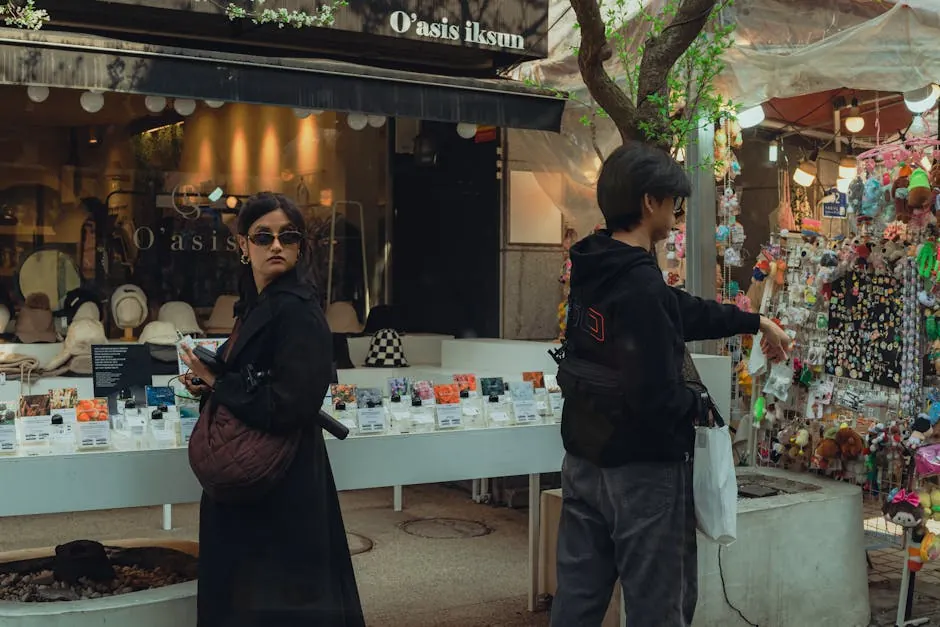
The offline flagship of Korea's largest online fashion platform. MUSINSA Standard Hongdae operates as the offline flagship of MUSINSA, the country's largest online fashion platform, and runs a working register that bridges the online-native platform tradition with the offline-flagship walkable retail format. The MUSINSA newsroom coverage from 2023 and Lemon8's MUSINSA coverage cite the Hongdae flagship as the platform's working offline reference. The floor reads larger than the single-brand flagships; the curation runs across MUSINSA's in-house line and a broader selection of platform-stocked emerging Korean labels. For a visitor whose Korean streetwear reading is built around the contemporary platform register — the brands that the country's young consumers actually purchase through their phones — this is the cluster's working reference. Staff handle international visitors comfortably; the platform's broader tourist-friendly app-and-website infrastructure produces a counter culture practiced at non-Korean orders. Best for: contemporary platform-register readers, returning patients who treat the online-to-offline bridge as the cluster's most current variable, and travelers who want a working read on what young Korean consumers actually buy. The flagship runs late enough into the evening that a post-dinner visit closes the rotation cleanly. Pricing sits in a register that the platform's online presence makes transparent; visitors who have walked the MUSINSA app before the trip find the floor reads as a familiar register.
Featured D — thisisneverthat Hongdae Flagship
The 2010 flagship often called Korean Supreme. thisisneverthat was founded in 2010 and operates as Korea's defining domestic streetwear brand — the label that international streetwear coverage most consistently positions as the country's export-facing flagship, with the brand often referenced as the Korean Supreme in shorthand. The Hongdae flagship is larger than the brand's department-store outposts and runs the cluster's most concentrated brand-statement footprint. The brand's own official site, SeoulShopper's Korean streetwear coverage, and SNKRDUNK Magazine's Korean streetwear surveys all cite the Hongdae flagship as the brand's defining offline location. The pieces span graphic hoodies, outerwear, accessories, and the seasonal-drop collections that the brand has built its export reputation around. The store register reads closer to a creative-direction showcase than a working-wardrobe floor; visitors arrive as much to read the brand's visual-merchandising language as to purchase. Staff handle international visitors comfortably given the brand's broader export footprint; the floor space is generous enough for an unrushed walk, and the seasonal drops produce a meaningfully different floor for returning visitors planning their second or third trip. Best for: first-time visitors who want the cluster's most internationally recognizable brand-statement read, returning patients who treat the seasonal-drop register as a meaningful trip variable, and travelers who appreciate visual-merchandising language as part of the streetwear retail experience. The weekday afternoon window is the calmest visit; weekend traffic builds the floor density to the upper end of what the brand-statement footprint comfortably handles.
Featured E — Visual Aid (Hongdae)
The multi-brand select store that closes the rotation as the curated-discovery anchor. Visual Aid operates inside the Hongdae core as a multi-brand boutique balancing established Korean designers with emerging labels — the working register of curated discovery that the cluster's single-brand flagships cannot themselves provide. Lemon8's Hongdae fashion coverage and KoreaTravelPost's Hongdae shopping surveys cite Visual Aid consistently. The floor reads tighter than the single-brand flagships; the curation runs across roughly fifteen to twenty rotating labels at any given visit, with the established Korean designer pieces sitting alongside the emerging labels in a register that the multi-brand format produces. For a visitor who treats curated discovery as the rewarding tier of the cluster — the floor where the next Hongdae flagship's debut collection often appears six to twelve months before the brand opens its own store — this is the working anchor. Staff handle international visitors comfortably though the store register is smaller than the export-facing flagships. Best for: returning patients on a second or third trip who have already walked the single-brand flagships, contemporary Korean fashion readers who treat the multi-brand select store as the cluster's discovery tier, and travelers who appreciate the curatorial work that the multi-brand format makes possible. The afternoon visit pairs naturally with the broader Yeonnam-dong cafe register north of the cluster; the floor is small enough that a careful thirty minutes covers the rotation thoroughly.

How the five compare at a glance
Categorical positioning, not ranking. The table sorts the rotation by register, brand format, and the practical question of what each store is best for.
| Store | Format | Register | Defining note | Best for |
|---|---|---|---|---|
| COVERNAT Hongdae Flagship | Single-brand flagship | 2008 heritage-workwear | First floor dedicated to women's Cloverheart line | Working wardrobe rather than statement |
| IISE Hongdae | Single-brand flagship | Design-grounded second-generation | Founded by Korean-American brothers | Conceptual streetwear readers |
| MUSINSA Standard Hongdae | Platform offline flagship | Online-to-offline contemporary | Korea's largest online platform offline anchor | Contemporary platform-register read |
| thisisneverthat Hongdae Flagship | Single-brand flagship | 2010 export-facing brand-statement | Often called Korean Supreme in shorthand | First-time international visitor anchor |
| Visual Aid | Multi-brand select store | Curated-discovery tier | 15-20 rotating established and emerging labels | Second or third trip discovery afternoon |
How to build a real Hongdae streetwear afternoon around a Seoul medical-trip visit
The cluster sits roughly twenty-eight minutes west on Line 2 from Gangnam Station, which makes a Hongdae streetwear afternoon a realistic rest-day option between consultations in the Apgujeong-Cheongdam corridor. For a patient on a five-day trip with one quiet day built in, the practical structure is to take Line 2 west from the hotel after a late lunch, exit Hongik University Station at the Hongdae core, and walk COVERNAT, thisisneverthat, and one of the conceptual or discovery floors (IISE or Visual Aid) across a measured three-hour afternoon. Returning patients with a second streetwear afternoon extend the rotation through MUSINSA Standard for the platform-register read; a third trip closes at Visual Aid for the multi-brand discovery tier. A patient on a recovery day after a non-invasive aesthetic session will find the cluster's walkability forgiving — the flagships are densely spaced, the surrounding park is the linear Gyeongui Line Forest Park rather than a vertical-climb option, and none of the floors require physical engagement beyond a calm walk-through. The streetwear rotation works independently of the clinical visit; we cover the clinical-side rest-day framing in the Seoul stem-cell aftercare guide and the broader Hongdae-as-rest-day positioning in the Seoul districts comparison. The cluster also reads naturally as the second half of a Hongdae vintage-and-streetwear afternoon; the Hongdae vintage rotation opens the working register that the streetwear flagships then build on with the contemporary collections.
Where Hongdae's streetwear cluster fits in the broader Seoul map
The Hongdae cluster is one of three principal Korean streetwear neighborhoods in Seoul; the other two are the Seongsu-dong warehouse-conversion belt east of the Han River, which has emerged in the past six years as the design-forward concept-store tier, and the Apgujeong-Garosu-gil axis, where the more luxury-positioned and global-brand flagships cluster around the high-end shopping district. For a visitor reading the city's streetwear map through a single lens, Hongdae anchors the historical and export-facing position for the domestic scene; Seongsu anchors the design-forward concept-store present; Apgujeong-Garosu-gil anchors the luxury-and-global-brand tier. The three together cover the practical full read for an international patient on a multi-trip schedule. The Hongdae rotation works best as the first cluster on a returning visitor's streetwear education because it preserves the working-flagship context that the newer Seongsu concept stores and the luxury Garosu-gil floors then build on. For a patient who treats the city through the streetwear map specifically, walking Hongdae first reads the right way around. The cluster also remains, in a way the others have begun to move past, organized around the working brand flagship rather than the destination concept floor — which is to say that the visitor leaves Hongdae understanding what the domestic streetwear register feels like before encountering the concept-store floors that elevate the curatorial register above the working brand.
Seasonal notes and what shifts through the year
The Hongdae streetwear cluster runs meaningfully seasonal in two registers — collection rotation and floor traffic — and a returning patient planning successive trips encounters a different lineup at every flagship listed above. Collection rotation tracks the global streetwear calendar more than the Korean one; the autumn-winter outerwear drops dominate the September-through-February window, with the thisisneverthat seasonal-drop collections and the COVERNAT heritage outerwear builds peaking from October through January. Lighter graphic apparel and the reworked basics dominate spring and summer, with the MUSINSA Standard floor rotating toward the contemporary platform-driven summer collections through the warm months. The brothers' second-generation collections at IISE follow a slower rotation than the broader export-facing flagships, which produces a meaningfully more considered floor for returning visitors who plan their second or third trip around the brand's seasonal release windows. Visual Aid's multi-brand floor rotates inventory roughly every six to eight weeks across the fifteen-to-twenty stocked labels, which produces a meaningfully different curation for returning visitors planning their second or third trip. Floor traffic is the second variable: Saturday and Sunday late-afternoon windows at thisisneverthat and COVERNAT build quickly enough that arriving in the early-to-mid afternoon weekday is the practical move for an unrushed walk, while the quieter conceptual register at IISE and the multi-brand select store at Visual Aid handle weekday and weekend traffic at a more measured pace. The MUSINSA Standard offline flagship runs late enough into the evening that a post-dinner visit reads cleaner than a weekend daytime visit. Cherry-blossom season in early April runs an outdoor-walk premium through the cluster — the linear Gyeongui Line Forest Park stretch frames the walk between the Hongik-core flagships particularly well during the early April window. Summer brings a cooler-floor premium to the larger flagships; the thisisneverthat and MUSINSA Standard interiors read coolly enough through the August humidity that the visit registers as a measured midday rest. Autumn delivers the cluster's quietest light and the most considered floor across all five stores; the late-October through mid-November window is, in my reading, the single best four-week stretch for a Hongdae streetwear afternoon, with the seasonal autumn-winter drops arriving across the cluster on overlapping timelines. Winter introduces the outerwear premium that the cluster has refined over the past three years — the heritage outerwear at COVERNAT and the seasonal-drop collections at thisisneverthat both read particularly well in the December-through-February window when the broader Hongdae nightlife has retreated indoors and the flagships manage their floors toward the seasonal demand. None of this changes the rotation logic above, but a returning patient planning the second or third visit at a different season will find the streetwear experience meaningfully different from the first trip's reading — which is part of why the cluster rewards multi-trip visitors more reliably than the single-stop tourist destinations elsewhere in the city. The cluster's seasonal logic also tracks the broader Korean streetwear export calendar; pieces that ship to Tokyo, Shanghai, Singapore, and Los Angeles select stores six months later debut on these floors first, which a returning visitor who treats domestic Korean streetwear as a working trip variable finds rewards the seasonal-drop afternoon most consistently.
“Hongdae rewards the visitor who treats it as a rotation rather than a single flagship — the 2008 heritage register at COVERNAT, the 2010 export-facing brand at thisisneverthat, the brothers' second-generation work at IISE, and the cluster's full read on contemporary Korean streetwear reads meaningfully complete.”
Daniel Park, MD
Frequently asked questions
Which Hongdae streetwear store is the right first stop for a visitor new to Korean streetwear?
thisisneverthat's Hongdae flagship, on the practical grounds that the brand is Korea's most internationally recognizable domestic streetwear label — founded in 2010, often referenced as Korean Supreme in shorthand, and the export-facing reference for the country's contemporary streetwear scene. The Hongdae flagship is larger than the brand's department-store outposts and reads as the cluster's defining brand-statement floor. The seasonal-drop register produces a different floor on each successive trip, which makes the store the working anchor for first-time and returning visitors alike.
How far is the Hongdae streetwear cluster from the Apgujeong-Cheongdam medical corridor?
Roughly twenty-eight minutes west on Line 2 from Gangnam Station, or twenty-five to thirty minutes by taxi in light traffic. From Apgujeong specifically, the practical route runs Line 3 to Express Bus Terminal, Line 9 to Dangsan, Line 2 to Hongik University Station, totaling around thirty-five minutes. For a patient with a quiet day between consultations, the cluster is reachable as a rest-day walk without the trip eating more than half an afternoon of round-trip transit, and the flagships are densely walkable from the subway exit onward.
Is COVERNAT actually older than thisisneverthat, and does it matter for visitors?
Yes, COVERNAT was founded in 2008 and thisisneverthat in 2010 — a two-year age difference that produces meaningfully different registers across the two flagships. COVERNAT's longer-tenure heritage-workwear lineage reads as the working-wardrobe foundation of the cluster, while thisisneverthat's slightly newer export-facing brand-statement footprint reads as the cluster's most internationally recognizable single-brand floor. For visitors building a working wardrobe, COVERNAT's heritage register sits closer to the rewarding tier; for visitors building a brand-statement collection, thisisneverthat's seasonal-drop register reads as the working anchor.
What is the difference between a single-brand flagship and a multi-brand select store in Hongdae?
A single-brand flagship — COVERNAT, thisisneverthat, IISE — operates as the brand's offline showcase, with the floor dedicated entirely to that brand's seasonal collections and creative-direction work. A multi-brand select store — Visual Aid in this rotation — operates as a curated discovery floor, with fifteen to twenty rotating Korean labels stocked at any given visit. The two formats serve different visitor needs: single-brand flagships for visitors who already know the brand they want, multi-brand select stores for visitors who treat curated discovery as the most rewarding register of the cluster.
Does MUSINSA Standard Hongdae carry the same inventory as the MUSINSA online platform?
Not exactly. MUSINSA Standard Hongdae operates as the offline flagship of the MUSINSA online platform, which is Korea's largest online fashion platform, but the offline floor carries a curated subset of the platform's broader online inventory — focused on the in-house MUSINSA Standard line and a selection of platform-stocked emerging Korean labels rather than the full multi-thousand-SKU online catalog. Visitors who have walked the MUSINSA app before the trip find the offline floor reads as a familiar register, with the working bridge between online discovery and offline-flagship walkable retail.
Which store is best for visitors who care about Korean design heritage specifically?
IISE for design-grounded second-generation work; COVERNAT for heritage-workwear lineage. IISE was founded by Korean-American brothers Terrence and Kevin Kim, whose brand name means 'second generation' and whose design language draws from traditional Korean architecture and traditional Korean dress — the cluster's most explicitly heritage-informed register. COVERNAT's heritage-workwear lineage reads in a different register, closer to a working-wardrobe foundation than an explicit cultural reference. The two together cover the cluster's heritage-and-design tier consistently.
Can I pair a Hongdae streetwear afternoon with the same-day vintage rotation?
Yes, and it is the structure most returning visitors arrive at. The vintage cluster opens in the early afternoon at Yeonnam-dong's brand-curated rooms and the Hongdae-core warehouse halls; the streetwear cluster opens in the late afternoon at the Hongdae-core single-brand flagships and closes at MUSINSA Standard's evening register. The practical rotation is a 14:00 vintage start at Yeonnam Y and Page-One, a 16:00 walk to the streetwear flagships at COVERNAT and thisisneverthat, and an 18:30 close at MUSINSA Standard across a measured six-hour day. The cluster is densely walkable; none of the stores require physical engagement beyond a calm walk-through.
Which store is most international-traveler friendly at the counter?
COVERNAT, thisisneverthat, and MUSINSA Standard handle international visitors at the counter most consistently — English-capable staff, the broader tourism-board recognition that COVERNAT carries, the export-facing brand reputation that thisisneverthat operates within, and the platform's tourist-friendly app-and-website infrastructure that MUSINSA brings to the offline flagship. IISE and Visual Aid handle international ordering smoothly though more briefly; the conceptual register at IISE and the multi-brand select store at Visual Aid are smaller floors where the working language runs primarily in Korean. All five stores accept international cards without friction.