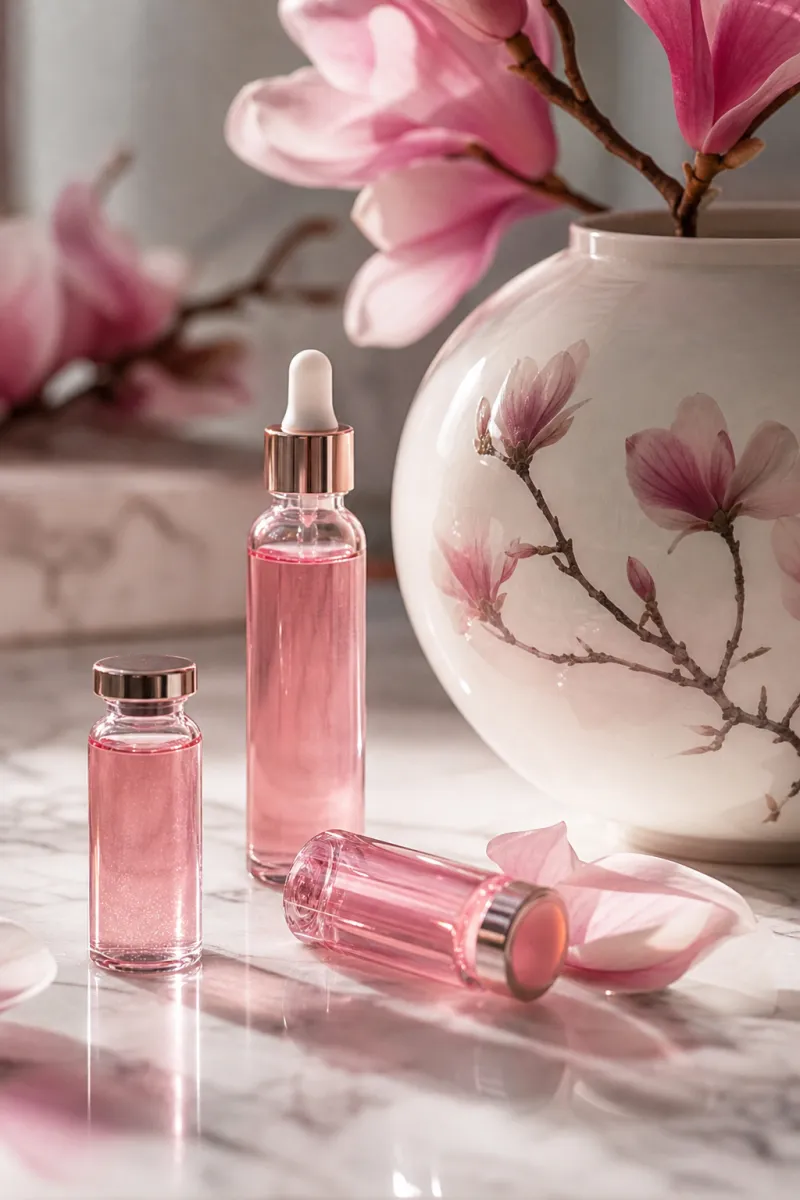
A Korea stem cell session at a skin clinic almost always uses a product taken from stem cells grown in a laboratory, such as conditioned media or exosomes, rather than living cells placed in the face. The product is spread over skin that a needling pen, RF microneedling or a fractional laser has just opened, once numbing cream has taken effect. The visit takes part of a day. Pinkness usually settles within hours to a few days, and flying home the same day is generally possible. Any change in texture builds over the following weeks rather than overnight. Clinics charge per session or per package, before VAT, and the clinic list and price table on this page let you compare both.
 Stem cell processing
Clinics in Seoul
4 clinics for Stem cell therapy in Seoul
The 4 Seoul clinics this page compares for Stem cell therapy are RE:BERRY Clinic Gangnam, ADO Clinic, Cellon Dermatology Clinic (Cheongdam) and Cellis LAB CLINIC.
 1
1. RE:BERRY Clinic Gangnam
★ 4.91,156 Google reviewsGangnam Station skin clinic built around five-language care
- Five-language desk
- Gallery-style interior
- Regenerative skin menu
At RE:BERRY Clinic Gangnam near Gangnam Station, Stem cell therapy sits with HIFU lifting, RF lifting and Botox among the treatments it focuses on. Two basement floors of KI Tower with a gallery-style entrance, private treatment suites, a VIP lounge, K-beauty zone.
- Board-certified dermatologists on staff
- Consultations in English, Japanese, Simplified and Traditional Chinese, and Spanish through in-house interpreters.
- Open every day, 10:00–20:00 including holidays, two minutes from Gangnam Station Exit 10.
- Menu features stem-cell, exosome, PRP and Rejuran-based skin programs alongside device lifting.
- Non-English speakers wanting own language
- Evening or holiday appointments
- Location
- Gangnam Station (Line 2) Exit 10, 2 min walk
- Languages
- English · 中文 · 日本語 · Español
- Listed price
- From ₩5,000,000 + VAT
 2
2. ADO Clinic
★ 5.0659 Google reviewsFiller- and lifting-led clinic near Sinnonhyeon Station
- Injectables & lifting
- Late weekday hours
- Station-front
ADO Clinic, a skin and aesthetic clinic in Seoul, mainly offers Botox, fillers and skin boosters; Stem cell therapy is on the menu too. Occupies the 3rd and 4th floors of RDL Tower on Bongeunsa-ro.
- Signature menu lists Ultherapy Prime, Thermage FLX, Sculptra, micro-filler and thread lifting programs.
- Open until 21:00 on weekdays and 19:00 on Saturdays and holidays; closed Sundays.
- After-work weekday appointments
- Filler and collagen-stimulator plans
- Location
- Seoul
- Listed price
- From ₩2,100,000 + VAT
 3
3. Cellon Dermatology Clinic (Cheongdam)
Stem cell and regenerative aesthetics clinic in Cheongdam
- Regenerative focus
- Cheongdam boutique
- Private rooms
Cellon Dermatology Clinic (Cheongdam), a skin and aesthetic clinic near Cheongdam Station, lists Stem cell therapy among its main treatments; HIFU lifting, RF lifting and Botox are also on its menu. A 3rd-floor Cheongdam clinic with private treatment spaces, dedicated care rooms and valet parking.
- Centers on stem cell and regenerative care, backed by an in-house stem cell research lab.
- Runs a dedicated clinic for complications after liposuction, fat grafting, thread lifts and lasers.
- Regenerative anti-aging
- Correcting prior procedure issues
- Location
- Cheongdam Station or Apgujeong Rodeo Station, about 5 minutes by taxi
- Languages
- English · 中文 · 日本語
 4
4. Cellis LAB CLINIC
Stem cell-based regenerative anti-aging clinic in Seocho
- Regenerative care
- In-house cell lab
- Hotel-suite recovery
Cellis LAB CLINIC is a skin and aesthetic clinic in Seoul that lists Stem cell therapy on its menu. Occupies a whole building from B1 to 7F, with a lobby, a consultation-only stem cell floor.
- Runs its own stem cell research lab next to an operating room on the 4th floor.
- Treatment plans begin with functional medicine testing for each patient.
- Regenerative anti-aging seekers
- Visitors wanting private recovery space
- Location
- Seoul
Is it for you?
Who Stem cell therapy in Seoul suits, and who should wait
These products are mostly chosen by adults whose concern is surface quality: dullness, fine roughness, enlarged pores, shallow acne marks or skin that stays irritated after laser work. They also suit travelers already planning a needling or fractional session, since the extract is laid on while the skin is open.
They are not a lifting, contouring or volume procedure. A vial of exosomes will not raise a heavy jowl, fill hollows under the eyes or flatten a deep scar. Anyone expecting a visible change after one visit should ask the doctor about a different approach first.
Usually a good fit
- Dull skin or uneven fine texture
- Shallow acne marks treated with resurfacing
- Lingering redness after earlier laser sessions
- Patience for gradual change over weeks
May be better to wait
- Pregnancy or breastfeeding
- Active acne, infection or eczema on the area
- Implants or permanent filler in the treated zone
- Loose skin that needs lifting or surgery
How it works
How a Stem cell therapy session runs
Stem cells kept in culture release growth factors and small membrane vesicles into the surrounding fluid. Makers filter that fluid into conditioned media, or isolate the vesicles as exosomes, so the vial holds signals from cells but no cells. In Korea these ampoules are cosmetics, not approved medicines, so they are applied to the surface straight after a device has made fine channels.
Much of the early research came from Korean groups. Park and colleagues, writing in Dermatologic Surgery in 2008, measured the growth factors released by adipose-derived stem cells and reported higher collagen production in an animal model, plus a single-patient pilot on sun-damaged skin. A 2015 retrospective series by Shin and colleagues in the International Journal of Dermatology reported higher hair density in 27 women after 12 weeks of conditioned media, a scalp use covered elsewhere on this site.
For anyone weighing South Korea stem cell offers, what moves the cost is the product and number of vials, the device that opens the skin, the area size and how many visits a package holds.
Consultation
The doctor checks texture, pores, scars and breakouts, asks about retinoids and recent procedures, and should show the sealed product and its maker.
Numbing
After cleansing, an anesthetic cream is left on the face until it works; this waiting time is usually the longest part of the appointment.
Opening the skin
A needling pen, an RF microneedling handpiece such as Potenza, or a fractional laser treats the area at a depth set for the goal; the pass takes minutes.
Applying the extract
The conditioned media or exosome solution is spread over the treated skin and gently pressed in while the channels are still open.
Calming
A cooling sheet or soothing cream ends the visit, with written instructions on washing, sunscreen and what to skip.
Stem cell therapy compared with other options
| Point | Culture extract after a device | Own-blood plasma | Rejuran (PN, polynucleotide) |
|---|---|---|---|
| Source | Fluid or vesicles from lab-grown stem cells | Platelets concentrated from a small blood draw | Purified DNA fragments, not PDRN |
| Living cells | None | None; plasma is not a stem cell product | None |
| How it reaches the skin | Spread over channels made by needles or laser | Placed with fine needles or over needled skin | Placed with fine needles |
| Feel under numbing | Prickling or warmth from the device | Needle pricks and a short blood draw | Stinging at each point |
| Usual downtime | Pinkness for hours to a few days | Pinpoint marks; depends on the method used | Small bumps for one to three days |
At a glance
Stem cell therapy facts
| Product type | Conditioned media or exosomes from cultured stem cells |
|---|---|
| Living cells | None in the vial |
| Status in Korea | Cosmetic ingredient, not an approved medicine |
| Delivery | Applied right after needling, RF microneedling or laser |
| Numbing | Anesthetic cream before the device step |
| Visit length | Part of a day, mostly numbing time |
| Downtime | Hours to a few days; up to about a week after fractional laser |
| Usual sessions | No fixed number; planned per person |
| Flight home | Generally possible the same day |
Recovery
What the days after look like
The face feels warm and looks pink, with pinpoint marks where needles passed. Gentle washing only.
Redness fades for most people. After a fractional laser pass, fine dark crusts can appear and should be left to shed.
Tone returns to normal; makeup and usual skincare restart once the surface has closed.
Any change in smoothness or tone appears slowly and differs from person to person.
Safety
Stem cell therapy risks and limits
- Brief redness, warmth and swelling from the device step
- Pinpoint bleeding, crusting or temporary darkening, mostly after fractional laser
- Irritation or an allergic reaction to the product or numbing cream
- Rare infection when aftercare is skipped
- Limited human evidence; much of the research is in cells and animals
Evidence
Research behind this page
- Clinical use of conditioned media of adipose tissue‐derived stem cells in female pattern hair loss: a retrospective case series studyInternational Journal of Dermatology · 2015 · Shin H, Ryu H, Kwon O, Park B, Jo S · doi:10.1111/ijd.12650
In 27 women with female pattern hair loss, conditioned media from adipose-derived stem cells was followed by higher hair density and thickness at 12 weeks, with no severe adverse reactions reported; the design was retrospective and uncontrolled.
- Adipose-Derived Stem Cells and Their Secretory Factors as a Promising Therapy for Skin AgingDermatologic Surgery · 2008 · Park B, Jang K, Sung J, Park J, Kwon Y, Kim K, et al. · doi:10.1111/j.1524-4725.2008.34283.x
Analyzed growth factors secreted by adipose-derived stem cells and reported increased collagen in an animal model, together with a one-patient pilot on photoaged skin.
FAQ
Questions about Stem cell therapy in Seoul
Which clinics offer Stem cell therapy in Seoul?
Clinics offering Stem cell therapy in Seoul include RE:BERRY Clinic Gangnam (Gangnam Station), ADO Clinic (Seoul), Cellon Dermatology Clinic (Cheongdam) (Cheongdam Station) and Cellis LAB CLINIC (Seoul). Each lists Stem cell therapy on its own menu; message the clinic directly to confirm the doctor, product and current price.
What is inside the vial when a Korean clinic says stem cell?
Usually it is a filtered extract from stem cells grown in a lab, either conditioned media or isolated exosomes, with no living cells. The extract carries growth factors and vesicles released by the cells during culture. Ask the clinic to name the product and its maker at the consultation, and to show the sealed vial before it is opened. A vague answer such as a house formula is a reason to keep comparing.
Is stem cell in Korea legal to offer to foreign visitors?
Yes, the culture-derived ampoules used at skin clinics can be offered to visitors because they are sold as cosmetic ingredients. Treatment with processed living cells is a different category that needs separate government approval and runs only at designated institutions. If a skin clinic suggests living cells for a routine facial concern, ask exactly which approval covers it. Your own country's rules may differ, which matters if you plan follow-up care at home.
Why does the product go on after a laser or needling pass?
The device opens tiny channels so the extract can move below the outer layer instead of sitting on top. A 2017 lab study on human skin tissue tracked exosomes reaching the epidermis over several hours. Because the ampoules are cosmetics, applying them over freshly treated skin is the accepted method, rather than pushing them in with a syringe. Without that step, most of the product would stay on the surface and wash off.
How much does the session hurt?
Most people describe prickling or warmth rather than sharp pain, because anesthetic cream is used first. Sensation depends on the device: a needling pen feels lighter, while a fractional laser feels hotter. Tell the doctor during the pass if it is too strong, since depth and energy can usually be adjusted for comfort. Numbing usually stays effective for the short time the device is in use.
Can I get on a plane the same day?
Generally yes; flying home on the day of treatment is usually possible after a culture extract and device session. Expect pinkness for hours to a few days, and fine crusting for up to about a week after a fractional laser. Bring sunscreen and a gentle cleanser in your cabin bag. Avoid saunas, alcohol and heavy exercise on the day of treatment.
When might my skin look different?
Any change shows gradually over several weeks, not right after the visit. Early swelling can make skin look plumper for a day or two, which fades. The number of visits is planned per person, and results vary from person to person, so judge the outcome after the full plan rather than the first session. Photos taken before treatment, in the same light, make that later comparison fairer.
Does a program made from my own blood count as stem cell care?
No, plasma prepared from your blood contains platelets and growth factors, not stem cells, even when a menu files it under the same heading. A small sample is spun in a centrifuge, and some clinics add a booster ampoule. Research on facial use of plasma is limited, so ask what the program contains and why it suits your skin. Combining it with a culture extract is possible, but the two are separate items.
Is it an option if my skin is easily irritated?
It can be, once the skin is calm. Needling over itchy patches, broken skin or an active flare raises the risk of irritation and infection, so treatment is postponed until it settles, and this cosmetic care is not a way to manage a skin condition. Bring a note of any creams you use, including steroid creams, so the doctor can judge the timing and the device depth.
What should I ask before the product is opened?
Ask for the product name, the maker, the batch and the number of vials included in your quote, and check the seal yourself. Also ask which device opens the skin and to what depth. A clinic that answers clearly and writes it down makes it easier to compare offers on the clinic cards here. Keep a copy of that note with your aftercare sheet for later visits.
Who should not have these products applied?
People who are pregnant or breastfeeding, and anyone with active infection, acne flares or open wounds on the area, should wait. Recent isotretinoin use, a tendency to keloid scarring, or a known allergy to product ingredients needs discussion first. If the real concern is sagging or deep volume loss, a lifting or filler consultation is the more appropriate step. Mention every medicine and supplement you take, even ones that seem unrelated.