
Stem cell IV in Korea is a drip into a vein, and on aesthetic menus the bag often holds a concentrate of your own blood with an added booster rather than cultured cells. That makes the first job a labeling one. Find out which product it is, then ask what grade of research stands behind that exact product given by that exact route. A study on a different product, or on mice, answers a different question.
 Stem cell processing
Clinics in Seoul
5 clinics for Stem cell therapy in Seoul
| # | Clinic | Devices & products | Area | Languages | Listed price | Google rating |
|---|---|---|---|---|---|---|
| 1 | RE:BERRY Clinic Gangnam | Stem cell therapy · PRP · Rejuran Healer · Juvelook | Gangnam Station | English · 中文 · 日本語 · Español | ₩5,000,000 | 4.9 (1,155) |
| 2 | RE:BERRY Clinic Myeongdong | Stem cell therapy · Rejuran Healer · Juvelook · Re2O | Myeongdong Station | English · 中文 · 日本語 · Español | ₩4,000,000 | 4.9 (1,091) |
| 3 | ADO Clinic | Stem cell therapy · Rejuran Healer · Juvelook | Seoul | - | ₩2,100,000 | 5.0 (659) |
| 4 | Cellon Dermatology Clinic (Cheongdam) | Stem cell therapy · PRP · Rejuran Healer | Cheongdam Station | English · 中文 · 日本語 | - | - |
| 5 | Cellis LAB CLINIC | Stem cell therapy · PRP | Seoul | - | - | - |
 1
1. RE:BERRY Clinic Gangnam
★ 4.91,155 Google reviewsRE:BERRY Clinic Gangnam is a skin and aesthetic clinic a 2-minute walk from Gangnam Station Exit 10, rated 4.9 from 1,155 Google reviews. It offers stem cell therapy alongside HIFU lifting, RF lifting and Botox. Staff consult in English, Chinese, Japanese and Spanish; listed stem cell therapy prices start at ₩5,000,000 + VAT.
Gangnam Station skin clinic built around five-language care
- Five-language desk
- Gallery-style interior
- Regenerative skin menu
- Board-certified dermatologists on staff
- Menu features stem-cell, exosome, PRP and Rejuran-based skin programs alongside device lifting.
- Its stem cell program draws the patient's own blood, isolates stem cells from it and delivers them with Potenza RF micro-channeling.
Skin-quality and regenerative programs · Non-English speakers wanting own language
- Location
- Gangnam Station (Line 2) Exit 10, 2 min walk
- Languages
- English · 中文 · 日本語 · Español
- Listed price
- From ₩5,000,000 + VAT
 2
2. RE:BERRY Clinic Myeongdong
★ 4.91,091 Google reviewsRE:BERRY Clinic Myeongdong sits near Myeongdong Station, a skin and aesthetic clinic that holds a 4.9 Google rating across 1,091 reviews. Its menu covers stem cell therapy as well as HIFU lifting, RF lifting and Botox. It consults in English, Chinese, Japanese and Spanish; listed stem cell therapy prices start at ₩4,000,000 + VAT.
Myeongdong flagship for lifting, glass skin and stem cell
- Flagship space
- Open every day
- Six languages
- Its stem cell program draws the patient's own blood, isolates stem cells from it and delivers them to the face, scalp or by IV.
- Lifting choices include Ultherapy Prime, Thermage FLX, Sofwave and Titanium Lifting, all performed by licensed physicians.
Glass skin booster programs · Sunday appointments
- Location
- Myeongdong Station (Line 4) / Euljiro-ipgu Station (Line 2)
- Languages
- English · 中文 · 日本語 · Español
- Listed price
- From ₩4,000,000 + VAT
 3
3. ADO Clinic
★ 5.0659 Google reviewsADO Clinic runs a skin and aesthetic clinic in Seoul; its Google rating is 5.0 from 659 reviews. Stem cell therapy is offered here together with Botox, fillers and skin boosters. Its listed stem cell therapy price starts from ₩2,100,000 + VAT.
Filler- and lifting-led clinic near Sinnonhyeon Station
- Injectables & lifting
- Late weekday hours
- Station-front
- Open until 21:00 on weekdays and 19:00 on Saturdays and holidays; closed Sundays.
- One minute from Sinnonhyeon Station Exit 4, with valet parking at the building.
Filler and collagen-stimulator plans · After-work weekday appointments
- Location
- Seoul
- Listed price
- From ₩2,100,000 + VAT
 4
4. Cellon Dermatology Clinic (Cheongdam)
Cellon Dermatology Clinic (Cheongdam) is a 5-minute walk from Cheongdam Station, a skin and aesthetic clinic. It offers stem cell therapy alongside HIFU lifting, RF lifting and Botox. Consultations are available in English, Chinese and Japanese.
Stem cell and regenerative aesthetics clinic in Cheongdam
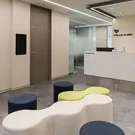
- Regenerative focus
- Cheongdam boutique
- Private rooms
- Centers on stem cell and regenerative care, backed by an in-house stem cell research lab.
- Combines skin treatments with fat grafting, thread lifts and VASER body contouring.
Regenerative anti-aging · Correcting prior procedure issues
- Location
- Cheongdam Station or Apgujeong Rodeo Station, about 5 minutes by taxi
- Languages
- English · 中文 · 日本語
 5
5. Cellis LAB CLINIC
Cellis LAB CLINIC is a skin and aesthetic clinic in Seoul. Stem cell therapy is on its menu.
Stem cell-based regenerative anti-aging clinic in Seocho
- Regenerative care
- In-house cell lab
- Hotel-suite recovery
- Runs its own stem cell research lab next to an operating room on the 4th floor.
- Covers anti-aging, skin regeneration and pain care, alongside skin and liposuction services.
Regenerative anti-aging seekers · Skin regeneration interest
- Location
- Seoul
Guide
Four grades of evidence a drip offer might lean on
Sellers rarely separate strong research from weak, so sort what they show you first. Only the top grade says much about people receiving a named product.
Note which grade a brochure actually reaches. A pile of lower-grade items does not add up to a higher grade.
| Grade | What it can tell you | What it cannot tell you |
|---|---|---|
| Pooled review of controlled trials | How often side effects appeared across many monitored participants | Whether a different, unnamed product behaves the same way |
| Single trial in people | What one product did under one protocol | How it performs outside that protocol or setting |
| Case reports and harm collections | What kinds of serious problems have occurred | How common those problems are |
| Animal or dish studies, patient stories | Ideas worth testing later | Anything reliable about safety or results in humans |
Guide
What a safety meta-analysis settles, and where it stops
Yim and colleagues presented a systematic review and meta-analysis in Cytotherapy in 2016 on the safety of mesenchymal stem cell therapy, a cell type often named when cell products are discussed. A review of this design pools published studies, which places it at the top of the ladder above.
Its limits matter just as much. Clinical studies generally run on characterized products, screened volunteers and planned follow-up under a protocol. A wellness drip with an unnamed product, no screening and no follow-up shares none of those conditions, so a reassuring pooled safety record cannot simply be borrowed by it. Ask whether the product in front of you was ever part of such a trial.
Guide
Lab vocabulary that decides how a product is classified
Master, Matthews and Abou-el-Enein, writing in Stem Cell Reports in 2021, set out how regulators in the United States and the European Union sort cell products. The terms are worth learning because a product sheet that avoids them is hiding its category.
Spinning blood in a centrifuge, filtering or freezing counts as light handling. Growing cells in culture or digesting tissue with enzymes counts as substantial handling, and that pushes a product into the medicine category with much stricter oversight. A second test asks whether the cells do the same job in the new site as in the original tissue.
- Same person or donor: are the cells yours or someone else's?
- Light or substantial handling: centrifuged only, or grown in culture?
- Same job or new job: is the tissue used for its original function?
Guide
Sales tactics the 2021 analysis describes
The same paper lists how providers of unproven cell interventions present their products as scientific. They overstate benefits, play down risks and leave out details that could lose a sale. Some point to animal studies or articles that only look scientific, obtain approval from paid ethics boards of doubtful standing, or list a pay-to-take-part study on a public registry, which nobody checks for quality.
The authors also listed Korea among 26 countries with documented clinics marketing such interventions, and they describe injuries and deaths after unproven products.
Guide
Testing a trial or approval claim before you agree
Turn any study or approval claim into checkable facts. A real study can be named, and a real approval names an authority and a use.
- The registry number of the study, plus its phase and sponsor
- Whether participants pay to join, which proper trials normally avoid
- The name of the ethics committee and the institution behind it
- The authority that granted any approval, and for which exact use
- Whether the cited paper tested this product, by this vein route
Evidence
Research behind this page
- Safety of Mesenchymal Stem Cell Therapy: A Systematic Review and Meta-AnalysisCytotherapy · 2016 · doi:10.1016/j.jcyt.2016.03.258
Systematic review and meta-analysis that assessed the safety of mesenchymal stem cell therapy by pooling published studies.
- Unproven stem cell interventions: A global public health problem requiring global deliberationStem Cell Reports · 2021 · doi:10.1016/j.stemcr.2021.05.004
Policy analysis describing the unproven stem cell intervention market as a global health problem, reviewing its marketing tactics and regulatory gaps, and proposing a World Health Organization expert advisory committee.
FAQ
Questions about Stem cell therapy in Seoul
Which clinics offer Stem cell therapy in Seoul?
Clinics offering Stem cell therapy in Seoul include RE:BERRY Clinic Gangnam (Gangnam Station), RE:BERRY Clinic Myeongdong (Myeongdong Station), ADO Clinic (Seoul), Cellon Dermatology Clinic (Cheongdam) (Cheongdam Station) and Cellis LAB CLINIC (Seoul). Each lists Stem cell therapy on its own menu; message the clinic directly to confirm the doctor, product and current price.
Can an animal study support a stem cell IV in Korea?
An animal study can suggest an idea worth testing, but it says little about what a drip does in a person. Doses, immune responses and the way cells travel in the blood differ between species. Master and colleagues noted in 2021 that some sellers point to animal work as if it showed results in people. Ask instead for a study in humans that used the same product and the same vein route.
Why does a product made from my own body still need checking?
Coming from your own body removes the donor question, but not the handling question. Material can still be contaminated, mislabeled or mixed with an added booster whose contents are not disclosed. Regulators also look at how heavily the material was processed, not only whose it is. So ask what was added, how it was prepared and who handled it between collection and the drip.
Is a study listed on a public registry proof that it is legitimate?
No, a registry entry shows only that someone filed a description, because public registries do not judge study quality. The 2021 analysis in Stem Cell Reports described clinics listing pay-to-take-part studies this way. Read the entry for its sponsor, phase and ethics committee, and be cautious if joining the study requires you to pay for the product yourself. A genuine trial can usually explain who funds it.
Why did researchers ask the World Health Organization to step in?
They argued that one country acting alone cannot contain the trade, because clinics close in one place and reopen in another. Master, Matthews and Abou-el-Enein proposed an expert committee that could align definitions across countries and run information campaigns against misleading claims. For a visitor the lesson is practical: rules differ by country, so a claim made abroad deserves the same scrutiny as one made at home.
Who can give me a second opinion before I agree to a drip?
Your own doctor at home is a sound first choice, since they know your history and medicines. Send them the product name, its ingredient sheet and any study the clinic cites before you travel. A hospital pharmacist can also help read a product sheet. An independent opinion is easier to get before payment than after, so ask early and keep their reply in writing.
What should I make of a brochure that cites a single study?
One study is a starting point, not settled evidence, and the details of that study decide how much it counts. Check whether it involved people, whether it tested the same product given into a vein, and how many participants took part. Then check whether it was published in a journal you can find yourself. Results vary from person to person, which one small study cannot capture.